
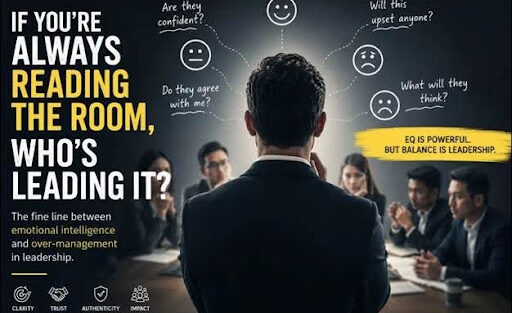
Can a Leader Have Too Much EQ? When Emotional Awareness Gets in the Way
We often tell leaders to read the room, manage their emotions and show vulnerability.
All good advice. But what happens when a leader becomes too good at it?
A recent CNA commentary makes an important distinction: openness can support trust, but it cannot replace trustworthiness. Employees ultimately judge leaders through their actions — whether they keep promises, make fair decisions, take responsibility and remain consistent under pressure.
Vulnerability Opens the Door. Behaviour Builds Trust.
A leader saying, “I got that wrong” can be powerful.
It signals humility and leadership authenticity. It can make it safer for others to acknowledge mistakes, challenge assumptions and ask for help. Research into leadership vulnerability has similarly found that acknowledging one’s contribution to problems can encourage reciprocal openness and help difficult conversations.
But vulnerability without boundaries can become emotional dumping.
When employees start reassuring the boss, absorbing their anxiety or worrying about the leader’s emotional state, the relationship has shifted. Instead of the leader creating psychological steadiness, the team is providing it.
Can You Have Too Much EQ?
Perhaps the bigger danger isn’t too much EQ, but overusing it.
Imagine a leader whose emotional and social radar is constantly switched on:
“How will they react?”
“Should I say this?”
“Will this upset someone?”
“How am I coming across?”
That awareness is useful — until it becomes over-regulation.
High self-monitoring can help leaders adapt, build relationships and navigate complex social environments. Yet constantly adjusting yourself to fit the room can create another problem: people may struggle to know which version of you is real.
Under leadership pressure, excessive awareness can also slow difficult conversations. Feedback gets softened. Decisions become over-processed. Necessary tension gets avoided.
The irony?
A leader trying very hard to protect leadership trust and leadership reputation may inadvertently weaken both.
EQ Needs Courage
Strong leadership isn’t emotional perfection.
It is knowing when to regulate and when to reveal. When to listen and when to challenge. When empathy is needed — and when clarity matters more than comfort.
That is where meaningful leadership soft skills training should go beyond simply teaching leaders to become more emotionally aware.
Whether through leadership training programs, leadership courses in Singapore or broader leadership development training courses, the goal should be balance:
Be emotionally intelligent enough to read the room — but authentic enough not to become controlled by it.
For leaders seeking greater clarity in Singapore’s increasingly complex workplace, perhaps the question isn’t, “How emotionally intelligent am I?”
It is:
“Does my EQ help me lead more honestly and courageously — or does it make me afraid to?”
FAQs
Does vulnerability automatically create trust?
No. Vulnerability can open the door, but consistency, fairness, competence and accountability sustain trust.
Can leaders share personal struggles?
Yes, when the disclosure serves a purpose and has been processed. Employees shouldn’t become responsible for managing their leader’s emotions.
Is high EQ bad for leadership?
Generally, no. Research associates leader EQ with many positive outcomes. The risk comes when emotional awareness becomes excessive self-monitoring, over-regulation or avoidance
What can extreme social awareness jeopardise?
Authenticity, decisiveness, candid feedback and the willingness to have uncomfortable but necessary conversations.
Reach out to us as your guide to leadership soft skills training in Singapore. We do work in Better Conversation Skills Singapore, Communication Skills Training Singapore, Influence Skills Training and Leadership Training Workshop — all designed to help leaders thrive in the real moments that matter.