
Polite Teams Don’t Perform—Emotionally Intelligent Teams Do
In today’s corporate world, Communication Skills are no longer just a “soft skill”—they are a core driver of performance, leadership effectiveness, and team success. Yet, what truly elevates workplace communication is emotional intelligence (EI). Sharmini Suthan often highlights that most workplace challenges are not purely technical—they are communication and emotion-driven.
Organisations that strengthen this human layer of performance through practical, experience-led development improve how people think, communicate, and collaborate at work.
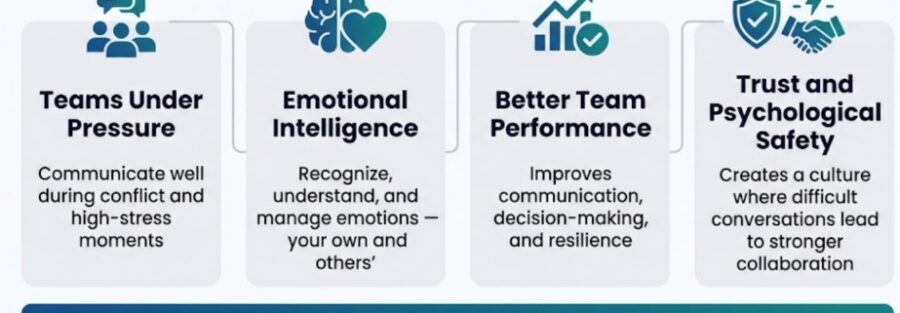
Emotional Intelligence: The Real Foundation of Team Success
Emotional intelligence is built on four key capabilities:
- Self-awareness: Recognising emotional triggers before reacting
- Self-regulation: Managing emotions under pressure
- Social awareness: Understanding others’ emotions and team dynamics
- Relationship management: Building trust through effective communication
When these capabilities are strong, team collaboration skills improve naturally, and communication becomes clearer, calmer, and more intentional.
How Emotional Intelligence Improves Workplace Communication
High emotional intelligence transforms everyday communication at work. Instead of reacting habitually, professionals pause, reflect, and respond intentionally. This leads to stronger listening, better feedback, and fewer misunderstandings.
Emotionally intelligent teams also become skilled at reading non-verbal cues—tone, body language, and emotional shifts—making communication more accurate and empathetic.
This is where many business communication skills training programmes fall short unless emotional intelligence is integrated as a core element.
Team Performance Starts with Psychological Safety
Strong teams don’t avoid difficult conversations—they handle them better. Emotional intelligence creates psychological safety, where people feel safe to speak up, share ideas, and challenge respectfully.
When stress increases, emotionally intelligent teams don’t collapse—they adapt. They use pressure to sharpen thinking and improve decision-making rather than letting it damage collaboration.
Leadership That Shapes Communication Culture
Leaders set the emotional tone of every team. When they demonstrate empathy, self-awareness, and emotional regulation, it shapes how everyone communicates.
The development and growth work must focus on helping leaders build this capability so that communication becomes not just efficient—but human, aligned, and trust-driven.
The basis is always on turning awareness into action—helping teams communicate better under pressure and collaborate more effectively.
Conclusion
Emotional intelligence is the hidden driver of strong communication and high-performing teams. When organisations develop EI alongside Communication Skills, they unlock better collaboration, stronger leadership, and long-term workplace success.
FAQs
- How can communication skills improve team performance?
They improve clarity, reduce misunderstandings, and ensure smoother coordination, leading to stronger collaboration and productivity. - How can workplace communication be improved?
Through emotional intelligence development, active listening, feedback culture, and structured communication training. - How do collaboration skills improve teamwork?
They build trust, improve coordination, and encourage shared responsibility in problem-solving and decision-making. - What is emotional intelligence training?
It is structured development that helps individuals understand and manage emotions to improve communication, leadership, and teamwork. - How does communication training benefit professionals?
It enhances clarity, confidence, leadership presence, and the ability to communicate effectively in high-pressure workplace situations.
Reach out to us as your guide to leadership soft skills training in Singapore. We do work in Better Conversation Skills Singapore, Communication Skills Training Singapore, Influence Skills Training and Leadership Training Workshop — all designed to help leaders thrive in the real moments that matter.